Why Solar Street Lights Are the Future of Sustainable Road Lighting
Solar street lights are one option for governments, contractors, developers and infrastructure planners seeking road lighting with less dependence on utility supply. Suitability still needs a project-specific comparison of useful lighting, energy…
Updated 2026-10-21 · 14 min read
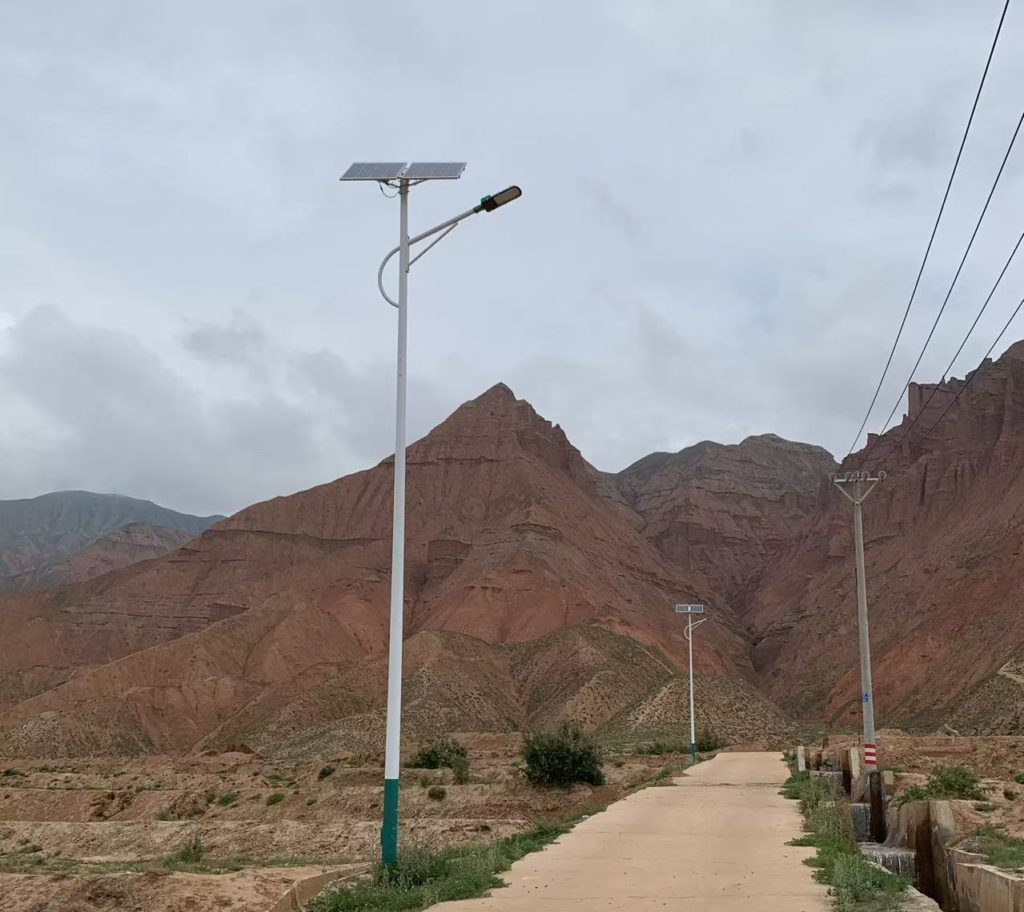
Solar street lights are one option for governments, contractors, developers and infrastructure planners seeking road lighting with less dependence on utility supply. Suitability still needs a project-specific comparison of useful lighting, energy collection, storage, installation and ongoing service. A solar label alone does not establish reliability, lower total cost or a lower environmental impact for every site.
For many project owners, the real question is no longer whether solar street lights can work, but whether the system design, battery autonomy, pole structure, and long-term maintenance plan are suitable for local conditions.
At quotation stage, compare whether the proposed system can maintain the required lighting in local conditions, whether the full project costs are identified, and whether replacement and maintenance can be carried out. These questions are more useful than assuming one technology or fixture wattage is the preferred answer for every road.
That is the real reason why solar street lights are increasingly seen as the future of sustainable road lighting. The value is not only in saving electricity. The real value is in reducing dependence on grid infrastructure, simplifying installation, improving deployment flexibility, and creating a road lighting solution that is easier to manage over the long term.
This trend is also closely aligned with broader solar adoption worldwide, as noted by the International Energy Agency on Solar PV.
For more project-focused articles, you can also explore our solar road project guide page.
Key Takeaways
- Solar street lights are becoming the future of sustainable road lighting because they reduce grid dependence, lower operating costs, improve deployment flexibility, and support long-term infrastructure sustainability.
- In the quotation stage, customers care most about lighting performance, battery autonomy, solar panel sizing, pole configuration, installation cost, and long-term maintenance.
- A professional quotation for solar street lights should be based on road conditions, project location, local climate, working hours, and autonomy requirements, not only on lamp wattage.
- For many remote, developing, or off-grid projects, solar street lighting can offer a more controllable total project cost than traditional grid-powered street lights.
- The right solar street lights solution is not the cheapest one on paper. It is the one that can be delivered, installed, and maintained with the lowest long-term risk.
1. Why More Road Projects Are Choosing Solar Street Lights
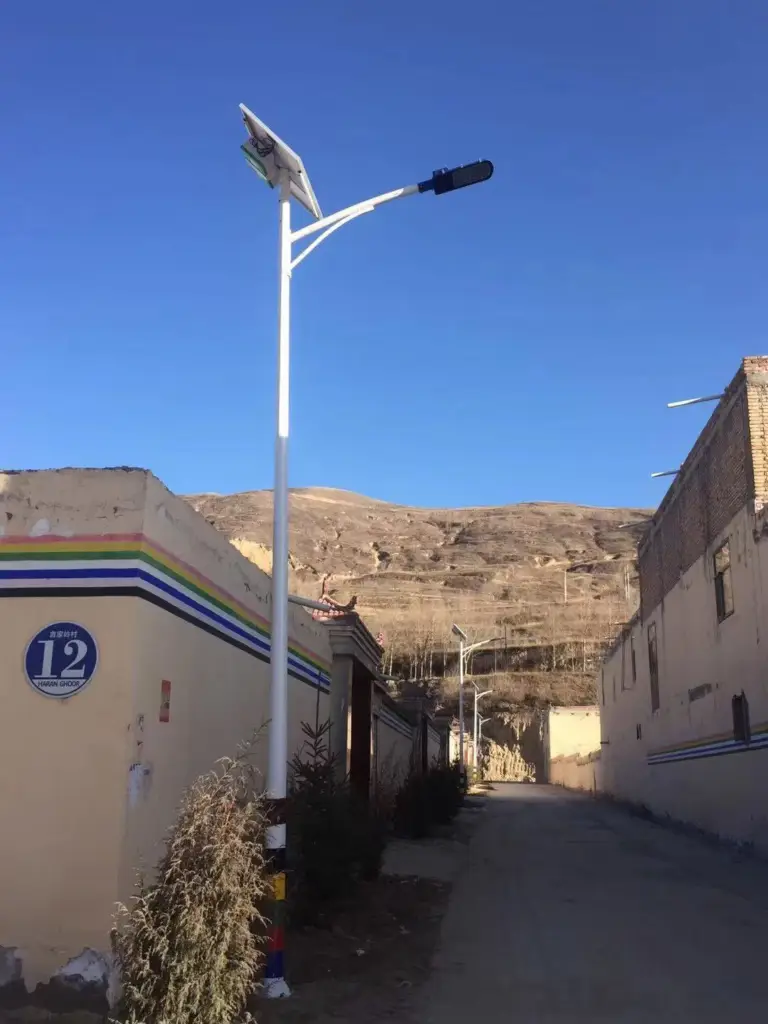
For many years, traditional grid-powered street lighting was considered the default choice for public roads. But project conditions have changed. Today, many road lighting projects are built in new development zones, rural areas, industrial parks, coastal roads, mining roads, border roads, and regions where power supply is unstable or electrical infrastructure is incomplete.
In these situations, solar street lights offer clear advantages. They do not require trenching for long cable runs. They do not depend on stable utility access. They can be installed much faster in many locations. And they allow project owners to control operating costs much more effectively.
This is why solar street lighting is no longer only discussed as a green option. It is increasingly viewed as a practical infrastructure solution. When customers ask whether solar street lights are worth it for road projects, the answer often depends on the real project environment, not on a simple product price comparison.
2. What Customers Really Care About When Buying Solar Street Lights
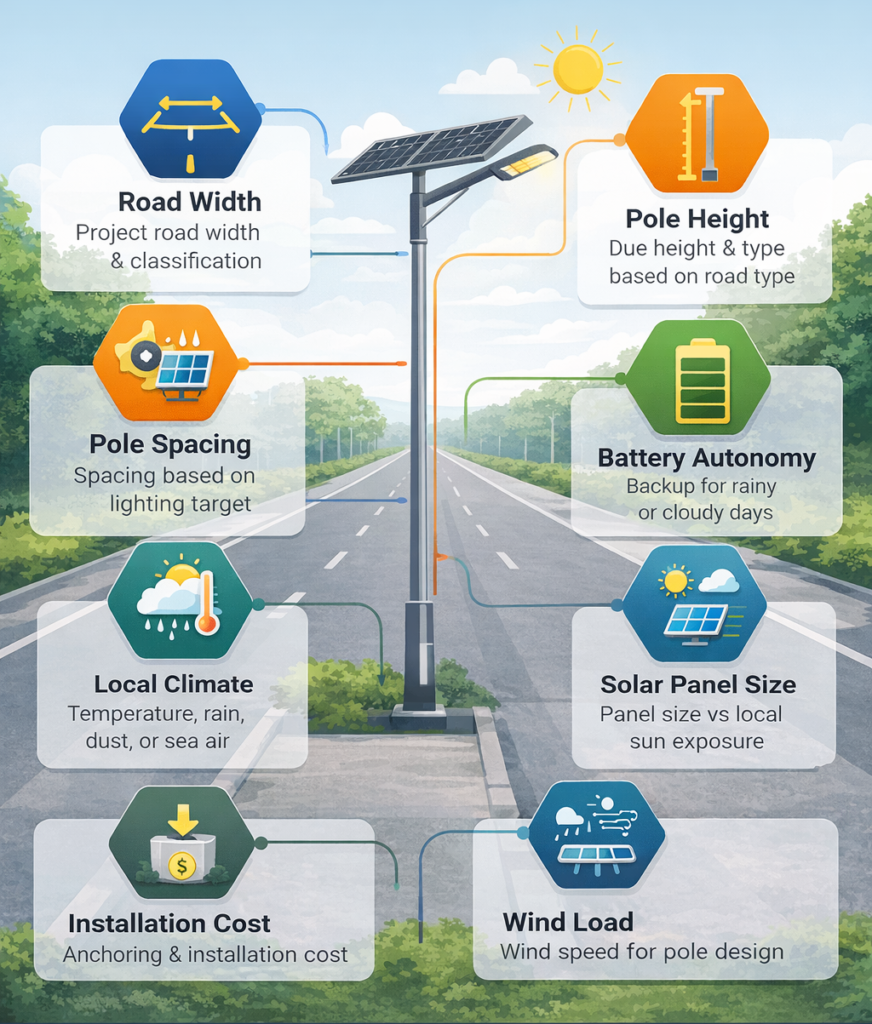
A customer may ask for a 30W, 40W, or 60W system, but the quotation also needs to address the following questions.
They want to know:
- Why is one quotation much higher than another?
- How many rainy or cloudy days can the system support?
- Will the brightness actually meet the road requirement?
- How often will the battery need replacement?
- Is the pole strong enough for local wind conditions?
- Is the system suitable for the climate in their country?
- Will installation and transport costs remain reasonable?
These are the real decision factors behind solar street lighting projects. A supplier who only gives a unit price is not solving the customer’s problem. A professional supplier should explain the logic behind the quotation and show how each component affects performance, reliability, and cost.
3. Solar Street Lights Should Be Chosen by Lighting Design, Not Just Wattage
One of the most common mistakes in solar street lighting projects is to focus only on lamp wattage. Many buyers ask for a 60W or 80W light as if wattage alone determines performance. But in road lighting projects, the real question is whether the system can achieve the required lighting effect.
A proper quotation should consider:
- road width
- pole height
- pole spacing
- single-side or double-side arrangement
- required illumination level
- road classification
- traffic conditions
- application scenario
In other words, solar street lights should be selected based on actual lighting design, not simply by product label. The same nominal wattage can perform very differently depending on optics, mounting height, beam angle, and layout.
For this reason, customers should not ask only, “How much is one solar street light?” They should ask, “What configuration is suitable for this road?”
4. Battery Capacity Is Often the Most Critical Cost Factor
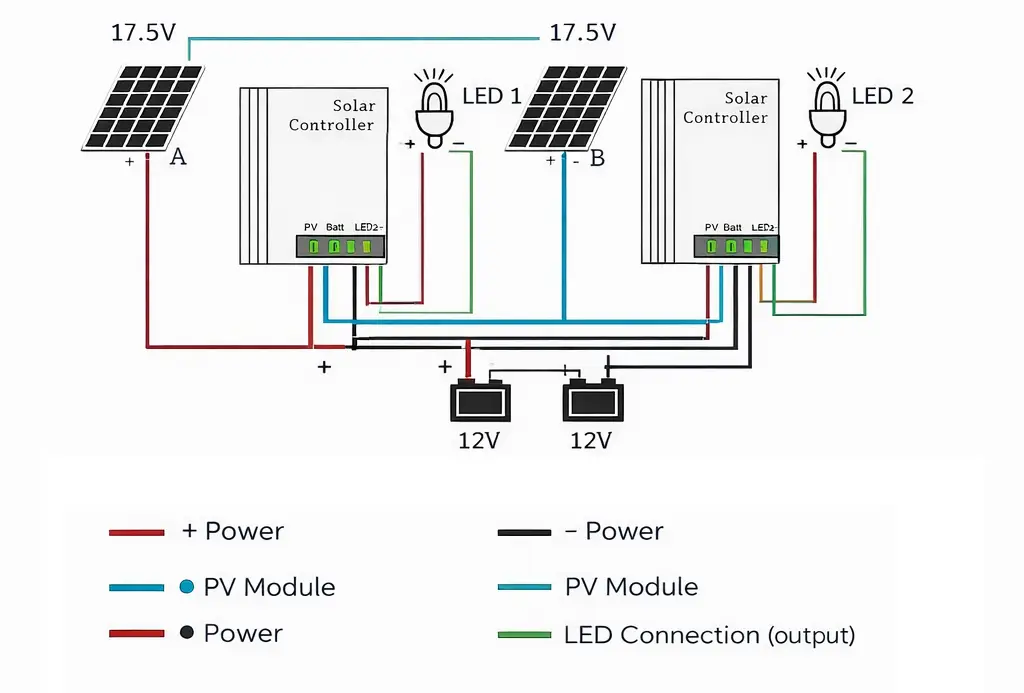
In real project quotations, battery configuration is often more important than customers first realize. For many solar street lights, the battery is not just a storage component. It is one of the main factors that determines reliability, autonomy, and long-term maintenance cost.
A system may look affordable in the quotation stage, but if the battery capacity is undersized, performance problems will appear quickly during cloudy weather, seasonal changes, or after battery aging.
This is why a serious supplier will ask:
- How many hours should the light work every night?
- Should it run at full power all night or use dimming profiles?
- How many autonomy days are required?
- What is the local solar radiation condition?
- What are the high and low temperature conditions?
- Is the project in a rainy, dusty, coastal, or desert environment?
Without these answers, a quotation for solar street lights is incomplete. The battery autonomy requirement is one of the key variables in any solar street light quotation factors analysis.
5. Solar Panel Sizing Must Match Local Climate and Load Demand
Some customers assume that larger solar panels automatically mean better performance. In practice, that is not always true. Oversized panels can increase cost and transport volume unnecessarily, while undersized panels can cause charging problems and shorten battery life.
The correct solar panel sizing for solar street lights depends on the relationship between:
- daily energy consumption
- battery capacity
- local peak sun hours
- seasonal sunlight variation
- dust, humidity, and shading conditions
- control strategy
This is why experienced suppliers do not simply use one universal configuration for every country. A project in the Middle East may require a very different design logic from a project in Southeast Asia or sub-Saharan Africa. Good solar road lighting design always reflects local climate reality.
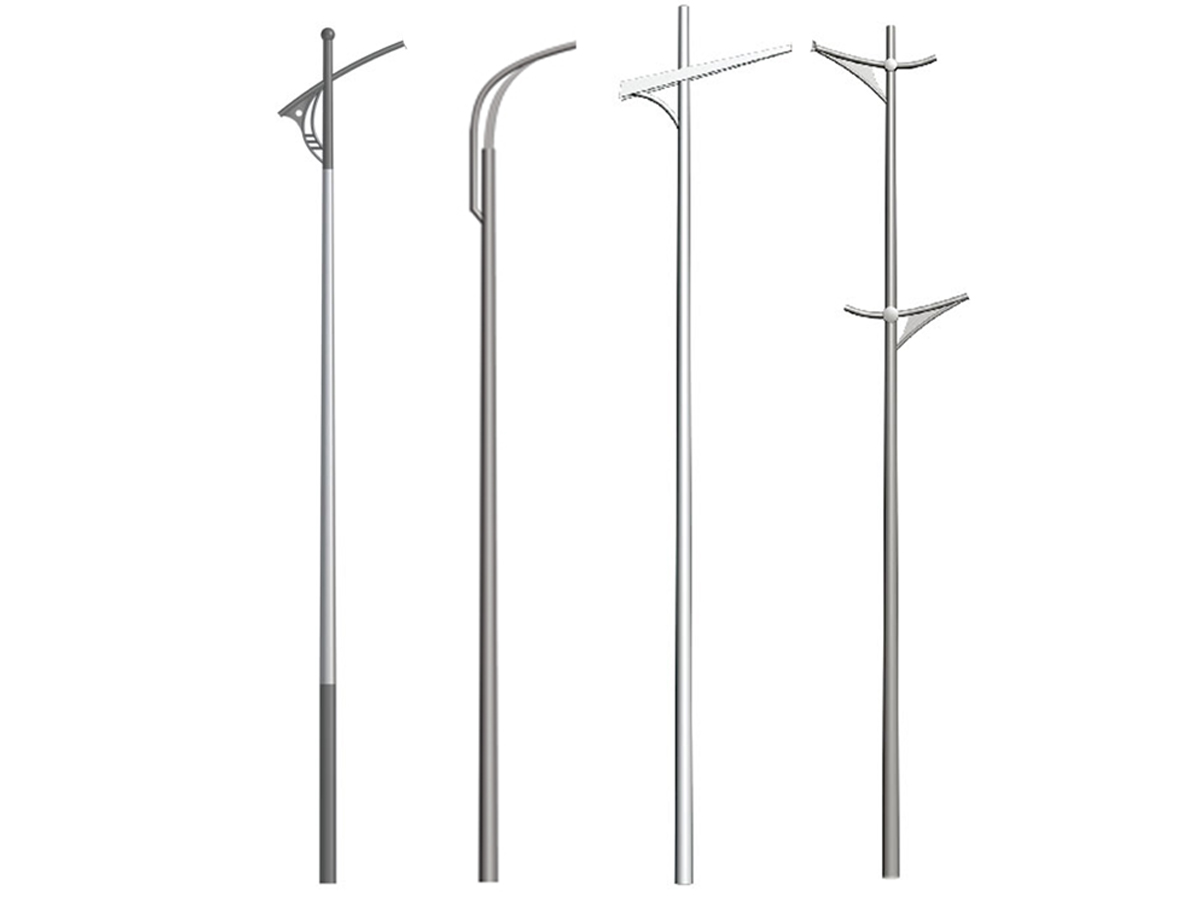
6. Pole Configuration and Structural Design Matter in Solar Street Lights Projects
In many quotations, buyers focus heavily on the lamp head, battery, and solar panel. But for road lighting projects, the pole and structural components are just as important.
If the pole design is weak, the project may face serious long-term safety and maintenance problems. For roads with high wind exposure, coastal corrosion, heavy-duty traffic conditions, or open-area installation, the structural design must be treated as a core engineering issue.
A complete solar street lights quotation should clearly explain:
- pole height
- pole diameter and wall thickness
- flange dimensions
- anchor bolt design
- surface treatment
- wind resistance assumptions
- corrosion protection level
From our overseas project experience, the most successful quotations are the ones that treat the lighting system and the steel structure as one complete solution.
7. Why Solar Street Lights Fit the Future of Sustainable Road Lighting
When people talk about sustainable road lighting, they sometimes focus too much on the environmental message alone. In real infrastructure decision-making, sustainability is not only about carbon reduction. It is also about cost stability, resource efficiency, service continuity, and long-term practicality.
This is where solar street lights have a strong future advantage. Compare the complete solar-versus-grid project costs over an agreed period and include battery replacement and service costs. Record the lighting schedule, replacements, cleaning, transport and end-of-life handling. Broad solar-investment or public-street references provide context; they do not certify a specific product, prove site savings or establish its life-cycle emissions without a defined comparison.
7.1 Lower Dependence on Utility Power
One of the biggest long-term advantages of solar street lights is that they reduce or eliminate dependence on utility electricity for road lighting operation. This is especially important in regions where electricity prices are high, grid access is limited, or power supply is unstable.
7.2 Better Fit for Remote and New Development Areas
For roads in rural areas, remote regions, tourism zones, industrial parks, and newly developed urban areas, solar street lighting offers strong flexibility. The system can often be deployed faster and with less dependency on supporting electrical infrastructure.
7.3 Better Alignment With Low-Carbon Infrastructure Goals
As public infrastructure investment increasingly moves toward efficiency and sustainability, solar street lights fit well into long-term planning goals. For many public-sector buyers, they are not only buying a product. They are choosing a road lighting model that supports future-oriented infrastructure development.
This is also consistent with broader urban infrastructure thinking reflected by UN-Habitat on sustainable and safe public streets.
7.4 Easier Expansion in Phased Projects
Many infrastructure projects are developed in phases. In such cases, solar street lights can offer a practical advantage because they are easier to expand section by section without waiting for complete grid extension.
8. Customers Should Compare Total Project Cost, Not Only Product Price
One of the biggest quotation mistakes in solar street lighting projects is to compare only the purchase price of one light. In real project procurement, the more useful comparison is total project cost.
Traditional street lighting can involve:
- cable cost
- trenching and civil work
- conduits and wiring
- transformers or distribution systems
- utility connection cost
- long-term electricity bills
- electrical maintenance cost
In contrast, solar street lights usually require a higher concentration of equipment cost upfront, but they can significantly reduce or eliminate several downstream cost items.
That is why the right comparison is not simply solar street lights vs traditional LED street lights on fixture price. The right comparison is:
- total installed cost
- total maintenance burden
- total operating cost
- total project risk
- speed of deployment
- dependence on utility conditions
For many projects, especially in remote or infrastructure-limited areas, solar street lights can create a more predictable total cost over time.
For public lighting projects, long-term value is closely related to energy and maintenance efficiency, which is also emphasized in World Bank guidance on energy-efficient street lighting.
9. Five Common Mistakes Buyers Make When Evaluating Solar Street Lights
9.1 Mistake 1: Looking Only at Wattage
Wattage alone does not define road lighting performance. Layout, optics, mounting height, and control strategy all matter.
9.2 Mistake 2: Ignoring Battery Autonomy Logic
Battery capacity should always match the required working hours, local sunlight conditions, and rainy-day backup target.
9.3 Mistake 3: Comparing Components Without Comparing System Matching
A strong LED chip, battery, or solar panel does not guarantee a reliable system if the overall configuration is not properly matched.
9.4 Mistake 4: Focusing Only on Initial Price
Some low-price quotations ignore transport efficiency, installation cost, maintenance burden, or realistic service life.
9.5 Mistake 5: Asking About Warranty but Not Warranty Scope
A professional buyer should ask what is covered, for how long, under what conditions, and how after-sales support will actually be handled.
10. What Should an Engineering-Led Proposal Explain?
A detailed proposal should explain design logic, local adaptation and long-term service arrangements. A low unit price, an extensive component list or a claim of past experience does not establish that the offered configuration meets the requirements of this project.
The best project quotations usually have these characteristics:
- they begin with road condition analysis
- they define lighting targets clearly
- they explain battery autonomy assumptions
- they match solar panel sizing to local climate
- they use a realistic dimming strategy
- they provide suitable pole design and corrosion protection
- they consider transport efficiency and installation practicality
- they explain maintenance expectations clearly
This is why experienced customers often prefer quotations that look more detailed and more transparent. In real engineering procurement, clarity reduces risk.
11. Why Solar Street Lights Are Not Just Replacing Traditional Lights, but Changing Decision Logic
This also changes how road lighting decisions are made.
Instead of asking only, “How much does one unit cost?”, project owners now ask:
- Is this suitable for my road condition?
- Will it work reliably in my climate?
- What happens during rainy seasons?
- How high will maintenance costs be after three years?
- Can the system be installed quickly and efficiently?
- Is the quotation based on engineering logic or only on sales language?
That shift in decision-making is exactly why solar street lights are becoming the future of sustainable road lighting. They are not simply a greener product. They are increasingly a more flexible, more manageable, and more strategic infrastructure choice.
12. Conclusion
If you are evaluating road lighting for a municipal road, rural road, industrial park, or new development project, the most important step is not to ask for the lowest price first. The most important step is to confirm the real technical and commercial decision factors behind the quotation.
A professional solar street lights solution should answer the following questions clearly:
- What lighting standard is required?
- How many autonomy days are needed?
- What is the local climate condition?
- What pole configuration is appropriate?
- What is the installation method?
- What maintenance workload should be expected?
A quotation should explain the proposed configuration and its expected long-term performance.
Use the solar energy balance review to retain the required night schedule, collection and recovery assumptions. Keep them with the supply and service scope in the solar street light procurement guide. Treat sustainability as a project comparison that includes useful lighting, replacement parts and end-of-life responsibilities, rather than an automatic consequence of the power source.
Project Information Checklist
Send the following details for a faster and more accurate quotation for your solar street lighting project:
- Project location (city/country)
- Application type (municipal road, rural road, industrial park, residential area, parking lot, pathway, etc.)
- Road width and road classification
- Pole height, pole spacing, and quantity
- Required lighting hours per night
- Required rainy day backup or battery autonomy
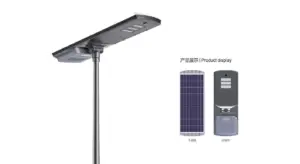
- Preferred system type (all-in-one or split solar street light)
- Local climate conditions (rainy season, high temperature, dust, coastal salt spray, etc.)
- Wind speed or structural requirement for poles
- Whether foundation parts, anchor bolts, and installation accessories are required
Existing article product links
Related Products
Additional Article Questions
What is the biggest mistake when buying solar street lights?
One of the biggest mistakes is focusing only on wattage or low price. A reliable solar street lights solution must match the road condition, autonomy requirement, and local climate.
Are all-in-one solar street lights always the best choice?
Not necessarily. All-in-one solar street lights are very suitable for many small and medium road projects, but for some higher-power, wider-road, or more demanding applications, split solar street light systems may be more appropriate.
What should I send to a supplier before asking for a quotation?
It is best to provide road width, pole height target, spacing, project location, working hours, autonomy requirement, application scenario, and any wind or corrosion environment details. The more project information you provide, the more accurate the quotation will be.
Article-specific FAQ
Are solar street lights suitable for main roads and municipal roads?
Yes, solar street lights can be suitable for main roads and municipal roads when the system is designed based on road width, pole height, spacing, lighting standards, and local climate conditions. The key is proper engineering design, not just choosing a higher wattage.
What factors affect solar street light quotation the most?
The main quotation factors include lighting requirement, battery capacity, autonomy days, solar panel size, pole configuration, local climate, installation method, and corrosion protection requirements.
How many rainy days can solar street lights normally support?
That depends on the battery autonomy design. In many projects, customers request 2 to 5 rainy days of backup. The correct number should be determined according to project location, season, and importance of the road.
Are solar street lights cheaper than traditional street lights?
Not always in terms of initial unit price. However, for many remote, off-grid, or difficult-to-wire projects, solar street lights can offer a lower total project cost because they reduce trenching, cabling, electricity bills, and utility dependence.
How long do solar street lights usually last?
The service life depends on component quality and operating conditions. LED modules, batteries, controllers, solar panels, and poles all have different life cycles. A professional quotation should explain expected service life and warranty scope clearly.
Related Guides
Need Support for Your Solar Street Lighting Project?
Qiyao Infra provides project-based support for solar street lights, including system selection, pole configuration, battery autonomy planning, layout suggestions, and quotation support for municipal roads, rural roads, industrial parks, residential streets, parking areas, and other outdoor lighting applications.
Whether you are comparing solar street lights with traditional road lighting, evaluating battery backup requirements, or planning a new solar street lighting project, our team can help you review the key technical and commercial factors before quotation and procurement.
Contact our team to discuss project requirements, recommended configurations, quotation support, or new solar street lighting plans.