What Affects the Price of Solar Street Lights?
Solar street lights are system solutions — not simple lamps. Their cost depends on performance requirements (brightness, runtime, autonomy), component quality (battery, LED, controller), environment (heat, corrosion, snowfall), and logistics. This guide…
Updated 2026-10-21 · 8 min read
Solar street lights are system solutions — not simple lamps. Their cost depends on performance requirements (brightness, runtime, autonomy), component quality (battery, LED, controller), environment (heat, corrosion, snowfall), and logistics. This guide breaks down every key cost factor so you can compare quotes clearly and avoid pitfalls.
Key Takeaways
- The biggest cost drivers are battery quality and system sizing based on working hours and autonomy.
- LED efficacy, optics, panel efficiency, and controller type significantly affect performance and cost.
- Environment-specific design (high temperature, coastal corrosion) changes material and finish requirements.
- Smart dimming and working profile strategy can reduce total system size and cost.
- A cheap solar street light quote may use low-grade components or undersized battery/panel.
1. What a Solar Street Light Quote Typically Includes (and Excludes)
Before comparing quotes, confirm what the supplier includes. Two quotes can look very different simply because of scope differences.
Typically Included
-
LED luminaire body with specified lumen output and optics
-
Solar panel (monocrystalline/polycrystalline)
-
Battery pack (LiFePO4 / other) with BMS
-
Controller (PWM or MPPT + dimming logic)
-
Mounting bracket or pole clamp
-
Basic wiring and connectors
-
Surface treatment (anodizing / powder coating if applicable)
Often Optional / Might Be Excluded
-
Pole or mast (sometimes quoted separately)
-
Motion sensors / smart control modules
-
Remote monitoring / IoT integration
-
Tool set for installation
-
On-site commissioning or training
-
Shipping, packing, insurance, customs duties
-
Warranty support or extended service
Tip: Ask for a line-by-line breakdown and component specifications. If a quote seems “too cheap,” it often excludes essential components or undersizes key parts.
2. LED Luminaire, Brightness & Optics
Wattage alone does not describe lighting performance. Compare complete-luminaire light output, distribution and input power under the stated conditions.
2.1 LED selection and complete-luminaire efficiency
Request the specified LED and luminaire version, test basis and operating conditions. A component brand alone does not establish the assembled light’s output, efficacy or quoted cost.
2.2 Optical distribution and road layout
Review the photometric data against road width, mounting height, spacing and the required lighting criteria. A Type II, III or IV label alone does not demonstrate uniformity or acceptable glare at the site; retain the actual layout and calculation assumptions.
2.3 Thermal design and housing
Ask for the proposed housing, operating conditions and supporting life information. Compare maintenance and replacement arrangements as well as the initial luminaire cost. Do not transfer a component life figure directly to the complete installed system.
3. Battery Capacity, Chemistry & BMS Quality
The battery is an important cost item whose contribution varies with the proposed capacity, construction and service arrangement.
3.1 Compare the specified battery models
LiFePO4: request the exact pack identity, documented operating conditions, protection and cycle-life test conditions.
Ternary lithium: compare the same information, including installation exposure, protection and thermal requirements for the offered pack.
Gel or lead-acid: include permitted operation, usable energy, maintenance, mass and replacement arrangements.
Chemistry alone does not establish the best life, safety or suitability in a hot enclosure. Compare the actual model and complete installation.
3.2 Energy and usable service
Review voltage, amp-hours and watt-hours together in the battery capacity comparison. Request the basis of any capacity or life claim, and keep the operating schedule and permitted conditions beside it.
3.3 BMS and protection
Confirm overcharge, over-discharge and temperature protection, and whether cell balancing is provided for the proposed pack. Identify how the battery, controller and protection work together. Do not disable protection or substitute a pack simply because its connector fits. Include traceable replacement parts and qualified service in the quotation comparison.
4. Solar Panel Grade & Charging Efficiency
The proposed panel and its installation affect collection and the ability to support operation while restoring the battery reserve.
4.1 Panel model, size and collection conditions
Compare the actual panel ratings, dimensions, mounting and available exposure. A cell-type label or higher efficiency figure alone does not establish a higher daily yield at a shaded or constrained location.
4.2 Degradation and long-term operation
Request the model-specific performance and warranty basis, then identify how cleaning, shading changes and reduced output are addressed in the operating plan. Retain the seasonal collection assumptions and battery recovery requirement with the quote rather than treating a panel grade as a guaranteed runtime.
5. Controller: PWM vs MPPT and Smart Dimming
The controller manages charging, lighting and protective behavior; its label alone does not establish project performance or savings.
5.1 PWM and MPPT
PWM: ask which panel and battery configuration the proposed controller is designed to operate with.
MPPT: review the specified input limits, battery compatibility, charging settings and expected yield for the actual arrangement. Do not treat MPPT as approval for a shaded installation or a guaranteed reason to reduce panel size.
Use the controller and battery matching review to retain that combination.
5.2 Dimming logic and the lighting task
A dimming program can change demand, but any lower background or late-night output must still suit the agreed task. Compare idle levels, triggered operation, activity and protection behavior before revising panel or battery sizing. Request a configured timetable and identify how later program changes will be recorded.
6. Mounting Hardware, Brackets & Poles
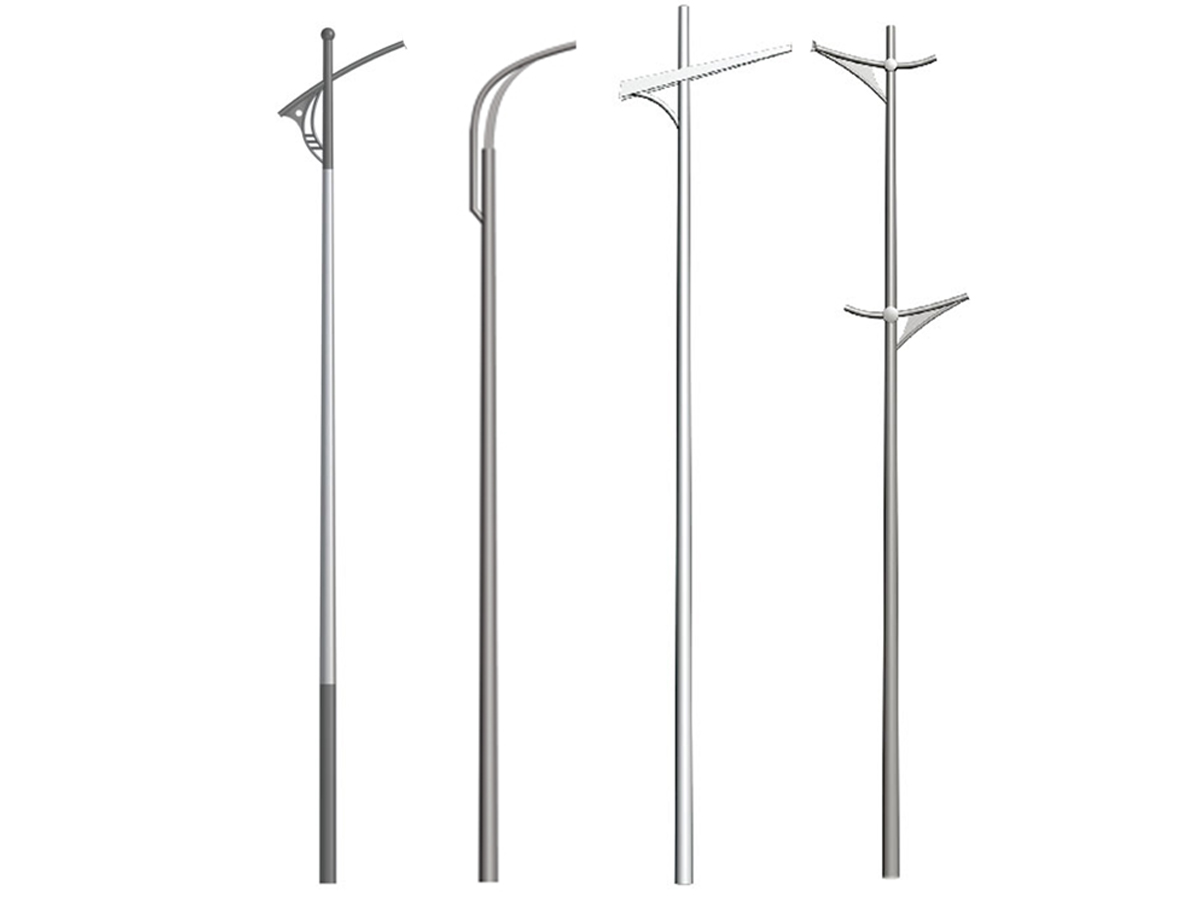
Pole and mounting inclusion varies by quotation. Identify the supplied parts and the parties responsible for the complete supporting arrangement.
6.1 Bracket and connection
Compare material, dimensions, attachments, corrosion protection and the reviewed interface. A heavier bracket, UV-resistance label or higher price alone does not establish a longer service life.
6.2 Pole, foundation and finish
Keep the proposed equipment loads, site wind and exposure information with the responsible structural review. Record whether the pole, foundation design, anchor bolts, installation and inspection are included, excluded or require separate confirmation.
7. Environment and Corrosion Protection
Environmental conditions affect the complete design and maintenance arrangement; a regional label does not define the required specification.
7.1 Coastal or industrial exposure
Give the actual exposure and service conditions to the responsible reviewers. Specify the proposed material, surface preparation, protective finish, connection details and inspection or repair requirements. Do not select coating thickness or a duplex system from the word coastal alone.
7.2 Hot or dusty locations
Request conditions for the complete light and separately for battery charging and discharging. Check enclosure exposure and the maintenance route. Do not add ventilation holes or alter a sealed assembly as an improvised cooling measure; retain the manufacturer-approved arrangement and protection.
8. System Design & Working Profile
Size and cost comparisons need the same required night service and collection conditions.
8.1 Working hours and output states
Retain brighter periods, background light, motion response and late-night requirements. Longer hours can change demand, but their effect depends on the complete operating program.
8.2 Autonomy and recovery
State the lighting level, hours and starting condition beside any reserve claim. Compare performance during poor charging and recovery while operation continues, rather than treating a number of rainy days as a universal specification.
8.3 Site and season
Provide actual location, permitted orientation, shading and the demanding season. Ask for collection assumptions and unresolved seasonal evidence; an annual sunshine average alone does not establish the required configuration.
9. Packaging, Shipping & Project Requirements
Solar systems are bulky. Packaging and logistics impact landed cost.
9.1 Sea Freight vs Air Freight
Breaker plates, crates, and careful protection increase cost.
9.2 Documents Required
Certificates (MTC, inspection reports) may be necessary for customs clearance.
10. How to Reduce Cost Without Sacrificing Performance
Compare cost options against the same required lighting and complete supply scope:
Provide project-specific seasonal exposure, shading and required working hours, rather than relying only on annual average sunshine.
Consider motion dimming only where the background level and detection suit actual approaches and waiting users. Use a motion-dimming test to keep the accepted behavior with the offer.
Compare controller options with the actual panel and battery, including charging settings and expected seasonal collection.
Choose the battery from documented model conditions, protection, usable service and replacement needs, rather than chemistry alone.
Standardize brackets and accessories only where the approved connections, structural review and service access remain suitable.
Record any change in output, operating hours, reserve, parts or installation work. A lower quote is not an equivalent proposal if those requirements have changed.
Project Information Checklist
Send the following details for a fast, engineering-ready quotation:
- Project location (city/country)
- Required pole height, spacing, and quantity
- Desired lumen output and working hours
- Autonomy days required
- Solar irradiation data / average sun hours
- Preferred controller type and dimming profile
- Battery chemistry preference
- Corrosion environment and finish requirement
- Whether poles/brackets are included
- Shipping destination port
Existing article product links
Related Products
Article-specific FAQ
Q1: Why do two quotes for the same wattage differ so much?
A: Differences in true battery capacity, panel grade, controller type (PWM vs MPPT), optics, and included scope cause price variation.
Q2: Is higher LED wattage always better?
A: No — lumens and optics matter more than nominal watt rating.
Q3: What battery type is best for hot climates?
A: Compare the actual battery models, not chemistry alone. Ask for the permitted charging and discharging conditions, enclosure exposure, protection, usable energy and cycle-life test conditions. Keep the approved controller and replacement arrangement with the offer; a chemistry label does not establish universal suitability or longer life in heat.
Q4: Does controller type affect total cost?
A: Controller selection can affect the initial quote and operation, but the complete panel, battery and settings need comparison. Ask which charging limits and yield assumptions apply to the proposed model. Do not infer a smaller panel, battery or total cost from the MPPT label alone, especially where shading or a different lighting schedule is involved.
Q5: What information do suppliers need for an accurate quote?
A: Location, working profile, autonomy days, battery preference, and corrosion environment are key.
Related Guides
Need a Fast Engineering Quotation?
Send the project location, road geometry, lighting schedule, quantity, pole and mounting information, seasonal exposure and delivery destination. Use the project RFQ checklist to identify included parts, installation work, service responsibilities and open questions. Each quotation is prepared for the actual configuration; confirm the response schedule and any further technical information needed when the project is reviewed.